Household Ecologies #5: The Alphabet Tower

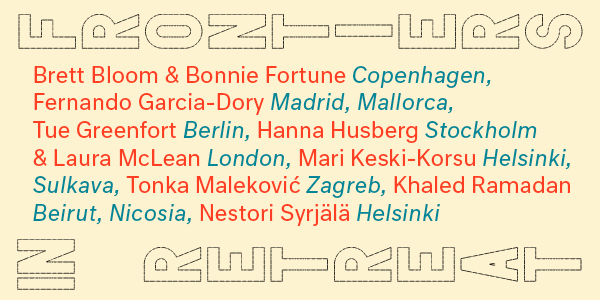
We would like to invite you to our upcoming exhibition: Household Ecologies #5: The Alphabet Tower , May 25 from 14:00-17:00 at Flensborggade 57.

Household Ecologies #5: The Alphabet Tower

Exhibition dates: May 25-June 23

Opening Saturday, May 25th 14:00-17:00 | Flensborggade 57 

An afternoon opening with a grill party and interactive art for kids. Bring snacks to share, come and hang out (with or without children)!

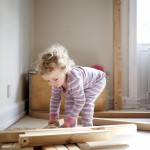
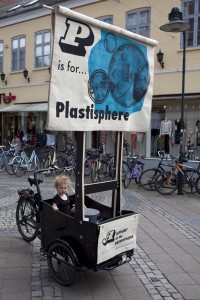
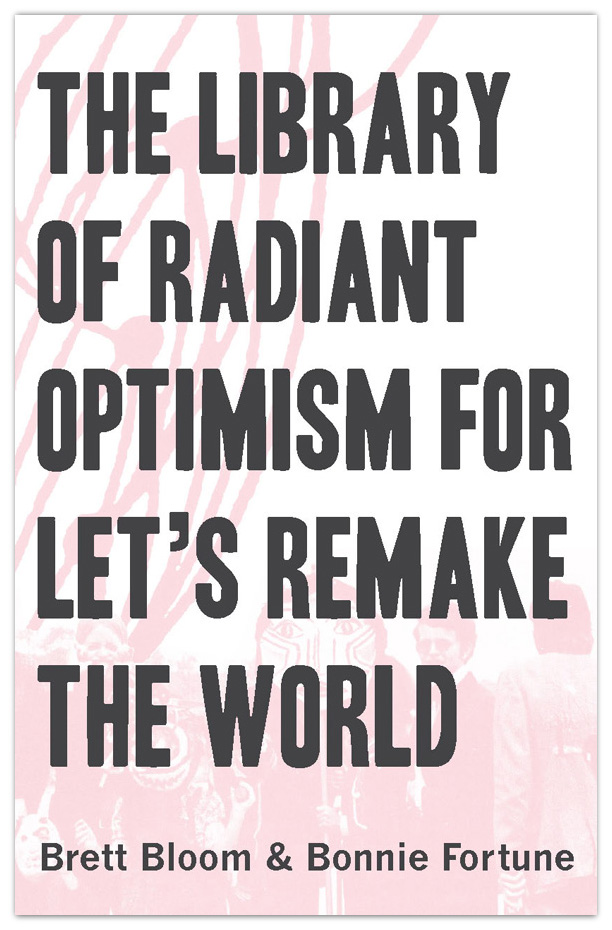
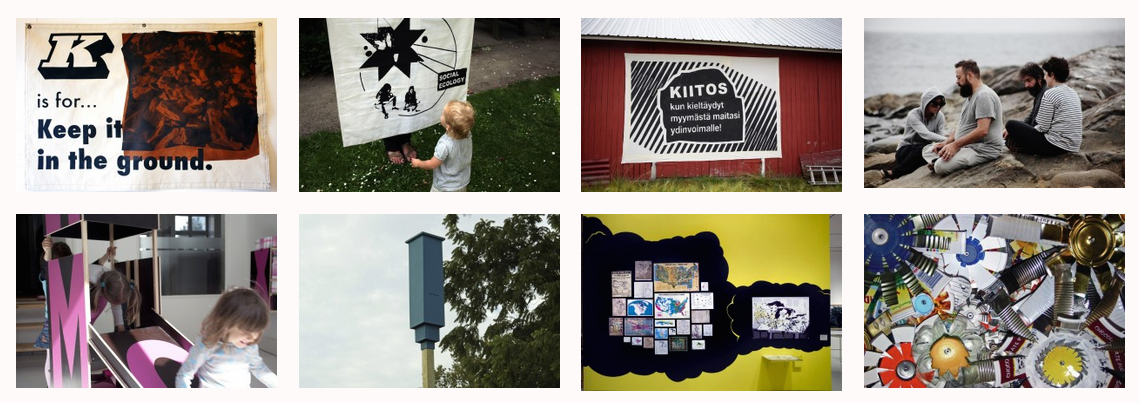
Household Ecologies #5: The Alphabet Tower is both a children’s play gym and a way to focus attention on how our domestic spaces are machines for producing and concretizing consumer culture. Using repurposed materials found in the home, Brett Bloom & Bonnie Fortune collaborated with their young daughter to construct a play gym with accompanying toys. With this project, Bloom & Fortune were interested in creating a functional object that filled a need, in this case a place for their daughter to play. The project is part of an ongoing series of household objects, such as a bed, a shelf, or a toilet paper holding system, made from repurposed materials in an effort to produce their own domestic ecosystem rather than purchase its contents. The artists consider how their small Copenhagen apartment is connected to larger flows of natural resources with each new object. The objects are aesthetically appealing and functional. For the artists, they represent a sense of agency and connection with the environment not possible within consumer based culture. 

Brett Bloom & Bonnie Fortune have been collaborating on art works, artist run spaces, archives, book projects, homemaking and developing their shared aesthetic sensibility since 2006. Their work focuses on both documenting and building cultures of resistance. They write about art, ecology, creating wild spaces, and supporting urban habitats for wildlife on their website, www.mythologicalquarter.net.

Flensborggade 57 is a shared exhibition and workspace in an old storefront located in the København neighborhood of Vesterbro. It currently houses Pia Rönicke (artist), Johannes Christoffersen (artist), Judith Schwarzbart (curator, critic), and Joshua Mittleman (artist). The space is hosting an exhibition series, Velkommen! Du kan gå nu, presenting the work of expatriate artists who are living and working in Denmark. The participants include: Guston Sondin-Kung, Yvette Brackman, Brett Bloom, Bonnie Fortune, Maryam Jafri and Joshua Mittleman. 

Flensborggade 57 is open Thursdays from 12:00-17:00, or after appointment.

Note: This exhibition has an afternoon opening time to encourage families with young children to attend and try out The Alphabet Tower.  

Wednesday Picture: The Color Yellow

On Sunday we went out to explore the Bispebjerg Bakke park, a huge field near our apartment in Ydre Nørrebro–not to be confused with the extravagantly designed apartment complex of the same name.  The field runs down in front of the Bispebjerg Hospital and is also home to Copenhagen's Skolehaver, a teaching garden for kids. At the park, you can hear the Skolehaver roosters chattering through the trees. We celebrated a little bit of spring time here listening to the roosters and picking dandelions (mælkebøtte in Danish).

Suttetræ (Pacifier Tree)

When children grow out of needing their pacifiers, but are reluctant to give the habit up all together, there is a lovely, local tradition that creates a ritual to solve the problem. The suttetræ , or pacifier tree, where children take their old binkies and tie them up as an offering to mark their transition from babies to big kids. All around Copenhagen, usually at the edge of a playground or a park, you will find suttetræer growing with the foliage of passing babyhood. Here are some examples from a recent visit to our local playground.

Friday connect...Garden of Your Mind

Here with this week's link round up. Have a good weekend wherever you are.

  • Thanks PBS for remixing Mr. Rogers and reminding us to imagine with the garden of our minds.
  • Maybe we can imagine a better way to deal with 400 parts per million ( atmospheric carbon dioxide levels) than what we've got so far.
  • 350.org, the global environmental action organization named after the goal level of 350 parts per million for atmospheric carbon dioxide levels, set up a special website to discuss what 400 parts per million means and what you can do about lowering that level.
  • Growing your own food to reduce your carbon footprint? Try these graphic garden maps to turn your backyard garden into a farm.
  • Finally, garden-as-art, bioaesthetics and the recent Documenta exhibition.

Every corner needs a garden

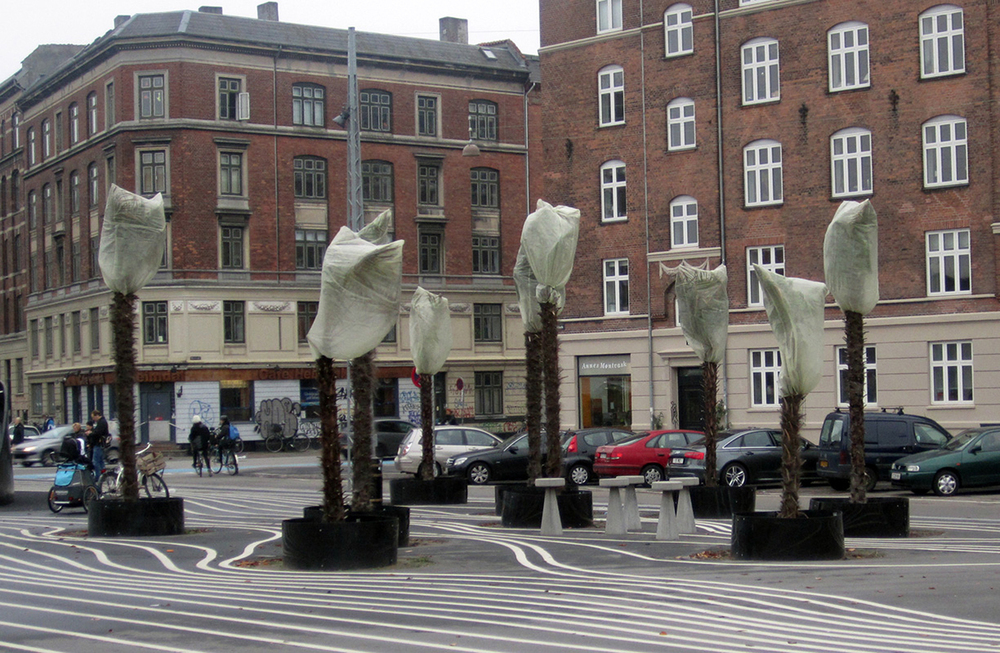
This container garden brightens the corner of Mimersgade and Midgårdsgade in our Ydre Nørrebro neighborhood. The little garden of potted plants is a dogged and valiant attempt at carving out green space in a broad expanse of concrete. It's closest competition being a ring of anemic imported palm trees, not at all acclimated to the Nordic climate. Though the plants and pots chosen to grow in this corner arrangement have probably also been shipped into Denmark to be sold at the local hardware store, this container garden set up seems more rooted than the landscape design of the adjacent public park. The city needs green spaces and growing things and if they aren't part of the official public space design, ad-hoc attempts like this fine example will pop up.

Mimersgade, Ydre Nørrebro, Copenhagen

Mimersgade, Ydre Nørrebro, Copenhagen

Superkilen + extreme neoliberalism + downloads in Danish and English

The kind editors over at Kritik magazine have given me their blessing to post the Danish version of my essay about Superkilen, titled "Superkilen: Park med ekstrem borgerinddragelse!" [Superkilen: Participatory Park Exreme!]. 

Scroll down for downloads.

Kritik, "Gentrificering", April 2013

Visit the Kritik homepage, or pick up a copy of the magazine in stores throughout Denmark.

Download: Superkilen: Park med ekstrem borgerinddragelse!

Download: Superkilen: Participatory Park Extreme!

Queer Power-Nørrebro street art

When you have a small child you often take long aimless walks around your neighborhood (and maybe even when you don't have a small child in your life). For me, these walks are a great time to soak up the little neighborhood nuances that shape the place we call home.

Lately, I have been noticing some new street art popping up in Nørrebro. "Queer Power" is appearing on benches and walls, written in colorful plastic and combined with the historical symbol of LGBTQ struggle, the pink triangle. These color pops of queer protest are making springtime in Copenhagen that much brighter.

Elegantly Capturing Rainwater in Østerbro

If every building in Copenhagen had rain barrels like this one—that could be used for watering decorative plants—it would dramatically reduce the amount of energy needed to clean "waste water" as well as the amount of drinking water used in maintaining city gardens and flower beds. It would also help prepare us for more intense rain storms like the one that flooded a lot of the city two summers ago, by capturing large amounts of building runoff. This is incredibly cheap, simple technology that the City could be encouraging and requiring. The big fantasies of carbon neutrality that the City is working towards in 2025 look even more ridiculous to me when very basic things like this are not being implemented. The top-down way this city is designed is incredibly uncreative, insensitive and not very informed. The arrogance and detachment of how this city is designed by "experts" shows up in situations like this. The City, as I have written elsewhere (see my essay on Superkilen), is clearly more concerned with branding itself than actually taking urban ecology seriously. A multiplicity of voices is needed if Copenhagen is going to really become a leader. This can be achieved when the design process is seriously opened up and the expert culture that drives how this city makes decisions is changed. There are many citizens, activists, designers, urban gardeners, and others, that could teach a lot to the City, but this will take a major shift in the status quo.

Rain barrel in Østebrro, Copenhagen

Fishy film–save our oceans

This video made by a Danish design team for Greenpeace is up for a Webby award. It also shares an important message about the crisis in unsustainable fishing practices. Watch it!

Comment

Art-Oil-Cities-Rivers-Offerings & Nicole Garneau

We knew the artist and activist, Nicole Garneau from Chicago, but got to know her more deeply during the time she spent in Europe last year both in Copenhagen and London. In London, Nicole lead the performance workshop, Art-Oil-Numbers-Bodies-Love in association with Platform London, about performative responses to the issues of oil business sponsorship in the arts.  In Copenhagen, she participated in the artist residency, Living Copenhagen. The residency looked at urban renewal issues and how to creatively interact with the city focusing on a particular area in Østerbro. 

Nicole is currently practicing a different kind of renewal at another artist residency in the US–ISLAND (Institute for Sustainable Living, Art, and Natural Design). ISLAND focuses on connecting art and ecology through workshops, an artist residency program, and other community enrichment activities. On their web page you can find information related to the arts as well as practical homesteading skills like how to graft fruit trees to build an orchard and how to make your own cheese. It provides a quiet retreat in the Michigan woods for writers, non-studio based artists, and musicians.

Nicole is staying at ISLAND to write her book documenting her UPRISING performance art project, which she preformed around the world from 2008-2012. In the midst of writing, she found time to make an offering to the Jordan River which runs near the residency for our daughter, Ada.

Photograph: Nicole Garneau

She had this to say about the process of making an offering to the Jordan River:

I was walking along the river, as I do every day, and I had been thinking about you, and Ada learning to walk, and our recent correspondence and I saw these cute little footprints in the sand and thought that maybe they could be part of an offering. So, I started looking around for other pretty things in the area and I found all these things on the ground. I liked the cedar branches because on the underside the green is quite bright, and I also liked that when I arranged them the cedar branches were sort of floating on the edge of the water and also on the sand. Then I said a prayer of thanksgiving for Ada's first steps and blew it into the offering and took pictures.

I think of offerings as basically prayers of gratitude made manifest in a physical form. It's fine to offer gratitude to the divine or your higher power or the earth through any form of prayer but I like taking the time to create some beautiful temporary installation or gather materials together and infuse them with the prayers. There's something reverent about those actions to me, like giving the earth a little extra love.

I also like documenting them and using social media to spread their intention.

Photo of Nicole Garneau during her workshop Art-Oil-Numbers-Bodies-Love from project tumblr.

The story of the river offering proposes a poetic way of interacting with non-human spaces giving us freedom to connect with the natural world in unusual ways.

Thanks to Nicole for her energy, hard work, and generous spirit.

Link love...Design solves environment

This week's link round up focuses on design and art projects that help, improve, or shape the environment. Do you think they work?

Photograph Matt Anker of a Piet Oudolf wild park.

  • Ocean cleanup, is it possible?  A young designer has generated a possible solution to the massive amount of plastic floating in the ocean.
  • Food shortage? No problem just re-engineer what people are able to digest, so that eating grass is possible.
  • Wild Parks? A Dutch designer is creating wild spaces that attract humans and non-humans alike.
  • Carbon Veil? Prolific artist and friend to the environment and the MQ, Buster Simpson designed a curtain, that reminds us of carbon emissions, for an airport parking garage ramp in Seattle.
  • Music for hospitals? Brian Eno has composed music for Montefiore Hospital in Hove, England. Many thanks to Chris Fremantle at eco/art/scot/land for calling our attention to this.
  • Buster Simpson, Carbon Veil

    Digital foraging

    A MQ friend, JP Goguen, library and information scientist by day and wild world enthusiast in his off hours, has a new foraging project. Goguen has been using social media to share information about wild plants–their names, what they look like, and when to forage them. He posts about wild "weeds" like garlic mustard, an European native introduced to North America in the late 1800s.  He has also created a free downloadable 'zine full of info and images about edible plants.

    Garlic Mustard ( Alliaria Petiolata )


    Goguen is not alone in using social media to spread the word about foraging wild plants to supplement your diet. Though he is working in North America, here in Denmark and other Nordic countries there are several projects of note that connect the wild world with the digital. Projects like Copenhagen's opensourcefood and Helsinki's Herbologies Foraging Network, are using digital tools to aid in the search for edible plants.

    André Amtoft and Arendse Krabbe of opensourcefood describe their project as a mixture of activism and art. They are interested in promoting good nutrition in connection with the landscape for asylum seekers in the asylum centers around Copenhagen, Denmark. Asylum seekers are required to sustain themselves on small amounts of money (the equivalent of about $9 per day). A healthy diet is difficult to maintain on the funds they receive. Amtoft and Krabbe started their project by making maps and geotagging plants in the vicinity of the asylum centers. Their goal was to share plant knowledge, aided by digital means, so that people in the asylum centers could then learn how to supplement their diets. Their field guides with seasonal geotagged plants can be found here.

    Wood sorrel (Oxalis )


    Andrew Gryf Patterson, an artist living in Helsinki, started the Herbologies/Foraging Network, which looks mainly at wild plants in Finland and Latvia. Patterson worked with Ulla Taipale to write about why people forage and then post it online.

    ... it has also been initiated from the position of ‘not-knowing’, and being an immigrant to a landscape and environmental habitat.

    The pair connect the trend from the rise in DIY and maker culture, to a more online culture for young people, and to the loss of local knowledge about landscape that happens as more people move to cities in the Nordic countries and Eastern Europe. They also note globalization and migrant populations foraging for several reasons–necessity, an interest in a newly adopted landscape, or because you are being paid as a migrant laborer. I particularly responded to Patterson's suggestion that foraging can be a way to learn about a newly adopted habitat or ecosystem.

    Head over to Patterson's website and click on the Herbologies/Foraging link to read the full essay.

    Puslane ( Portulaca oleracea )

    Foraging, as a way to supplement a diet, as a way to learn about a landscape that is new to you–either because you recently immigrated or because climate change has shifted what is growing–links to many larger social and political issues that affect our globalized society. Using social media to share information on foraged plants can also be about sharing resistance to how these large scale changes are effecting everyday life.

    I want to sign off with a recent video interview with Vandana Shiva interviewed by Bill Moyers. It is an excellent interview from an inspiring environmental activist, in which Shiva discusses how Monsanto's Roundup ready product has killed off beneficial "weeds" that poor mothers would forage, in a time before Roundup, from between commercial crop rows in India to supplement their diet.

    Small plants, overlooked as weeds, can have huge impact on our world. 

    Die Kunst der Intervention II / The Art of Intervention 2

    The Mythological Quarter was in residence in Berlin last year in the early spring at Lichtenberg Studios in Berlin. Uwe Jonas, the director of the residency program, puts together an exhibition each year of the work of the residents at the studios. We have a couple of things in this show reflecting on urban bird habitat in Berlin and thinking about ways to increase it and make more of it. Berlin is a great city already for urban wild life, but there are many things that can be done to help support and encourage more space for animals.

    This vine provides food and shelter to a large flock of starlings in Berlin's Lichtenberg neighborhood. The vine stays green and holds its berries through the winter and into the spring. 

    We made vine starts in the studio and handed them out to people in Berlin who wanted to plant them. We took one vine back to Copenhagen and will find a place to plant it there.

    Below is all the information about the exhibition:

    17. April bis 24. Mai 2013

    Die Kunst der Intervention II

    Die Kunst der Intervention II

    Die Lichtenberg Studios 2012

    Die Ausstellung im ratskeller Lichtenberg (Möllendorffstraße 6, 10367 Berlin)

    Eröffnung Mittwoch, 17. April um 19 Uhr

    Die Lichtenberg Studios haben nun schon das zweite Jahr internationalen KünstlerInnen einen mehrwöchigen Aufenthalt ermöglicht, um Lichtenberg seine urbanen, architektonischen, sozialen Räume zu erforschen und subtile Interventionen im Bezirk durchzuführen. In diesem Kontext wurden ästhetische, funktionale, kulturhistorische und soziale Verbindungen von Kunst, Architektur und öffentlichem Raum entwickelt. DieLichtenberg Studios freuen sich nun wieder die  Ergebnisse der Aufenthalte in Lichtenberg, die 2012 im Rahmen des artist-in-residency Programms entstanden sind, präsentieren zu können. 

    Detaillierte Informationen unter: www. lichtenberg-studios.de
     
    KünstlerInnen: Patrick Borchers, Alexander Callsen, Jorn Ebner, Gilles Fromonteil, Ingo Gerken, Lisa Haselbeck, Birgit Hölmer, Uwe Jonas, Köbberling/Kaltwasser, Rita Leppinemi, Antonia Low, Leo de Munk, Jürgen Palmtag, Andrea Pichl, Petra Spielhagen, Tommy Støckel, Hikaru Suzuki, The Mythological Quarter, Asami Togawa, Ella Ziegler

    Öffnungszeiten: Mo–Fr 10–18 Uhr

    U- und S-Bahn Frankfurter Allee (S41, S42, S8, S9, U5), Tram 16, M13

    Our resilient soy bean plant

    Last year we grew some heirloom soybeans at DRYK Nørrebro, the roof top urban garden in our neighborhood. We wanted to grow seeds that could tell a story and be shared from year to year. Growing these soy beans,  which even though they came from a seed bank in Russia miles away, became a way for us to connect to our adopted home.

    We chose the soy bean plant because it is a plant grown around the world for a wide variety of reasons. It is also often a highly modified seed. We moved to Nørrebro in Copenhagen from the Midwestern United States where miles and miles of soybean plants signify industrial agriculture and all of its attendant problems, from soil depletion to food security issues. Saving seeds, sharing them in your community from year to year, is an important part of how preserve our planet's biodiversity and its resilience in the face of natural disasters.

    Soy bean plant

    Part of the process of saving seeds is replanting some of the seeds each year to keep them vital. Here is one of our soy bean starts, springing up in our home.

    No more monoculture!

    Our neighbors, the trees

    Last week, city workers came around the neighborhood and trimmed branches from the trees on Balders Plads in the Mythological Quarter. The images below are the remnants of their efforts. Living with trees, plants, and wildlife in city spaces requires careful management. Even the smallest bits of wildness in the urban landscape are carefully maintained.